
Multi-Simulator Testing Framework
About The Project
Building a Multi-Simulator Validation Framework
The OEM's autonomous vehicle development program faced critical bottlenecks in validation and testing cycles. Initially, the team invested heavily in a single proprietary simulator (NVIDIA Drive Sim) expecting it to cover all development and validation needs—perception testing, planning algorithm validation, traffic scenario simulation, and hardware-in-the-loop testing. However, as the program scaled, significant gaps emerged.
The Challenge
When One Simulator Became the Bottleneck
The OEM's autonomous vehicle development program faced critical bottlenecks in validation and testing cycles. Initially, the team invested heavily in a single proprietary simulator (NVIDIA Drive Sim) expecting it to cover all development and validation needs—perception testing, planning algorithm validation, traffic scenario simulation, and hardware-in-the-loop testing. However, as the program scaled, significant gaps emerged. The proprietary simulator excelled at multi-sensor physics simulation but lacked flexibility for rapid iteration on novel traffic scenarios and edge cases.
Real-world testing revealed that certain perception algorithms trained exclusively on the simulator showed poor performance in unstructured urban environments. Traffic simulation fidelity was insufficient for validating behavior planning in dense, unregulated scenarios. Additionally, the high computational cost and licensing fees for the single simulator approach created bottlenecks, forcing developers to queue for simulation time rather than run parallel validation workstreams. This serial bottleneck extended development cycles by 6+ months and delayed time-to-market for autonomous features.
The Solution
A Framework Built Around Specialized Simulation
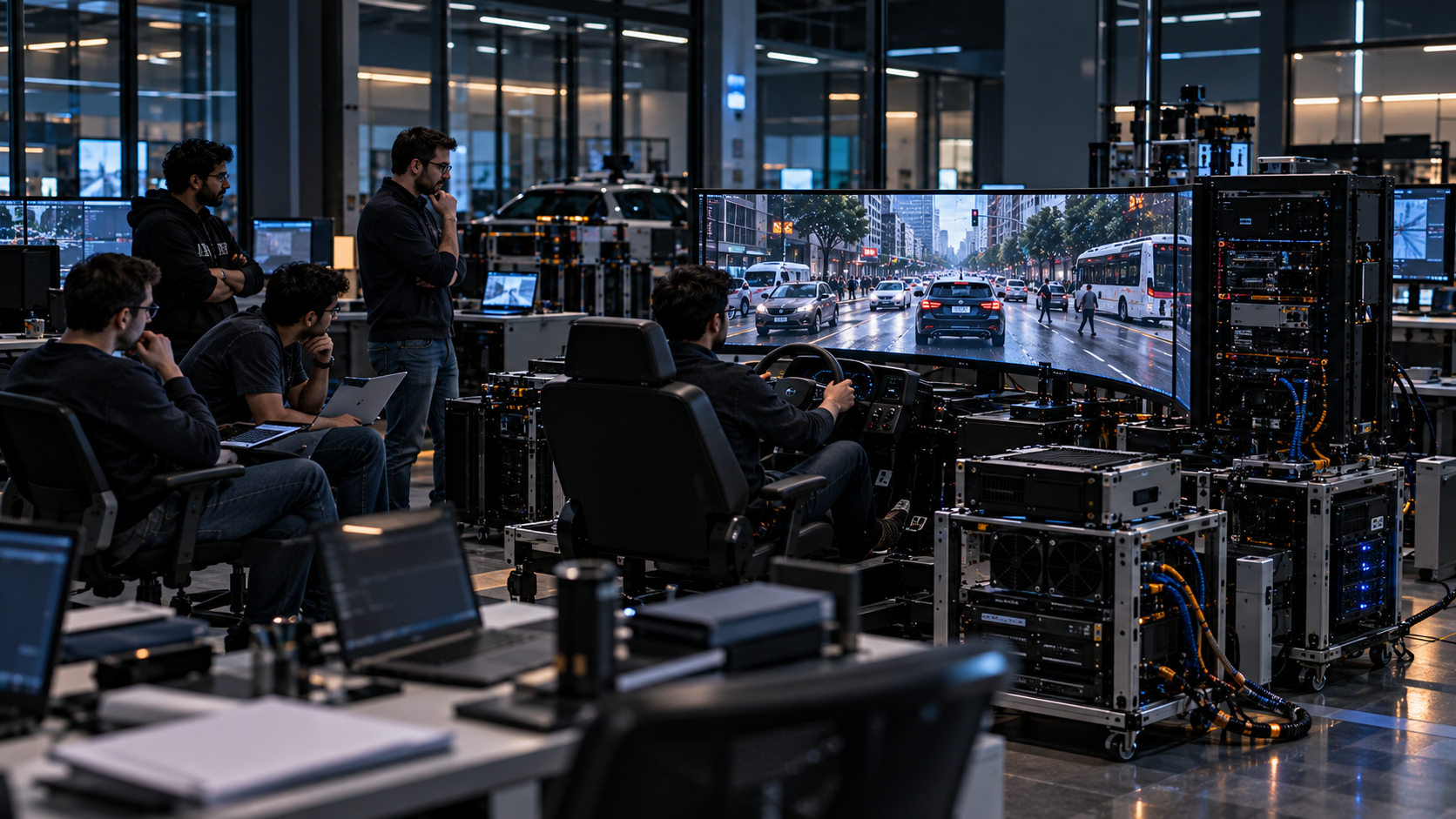
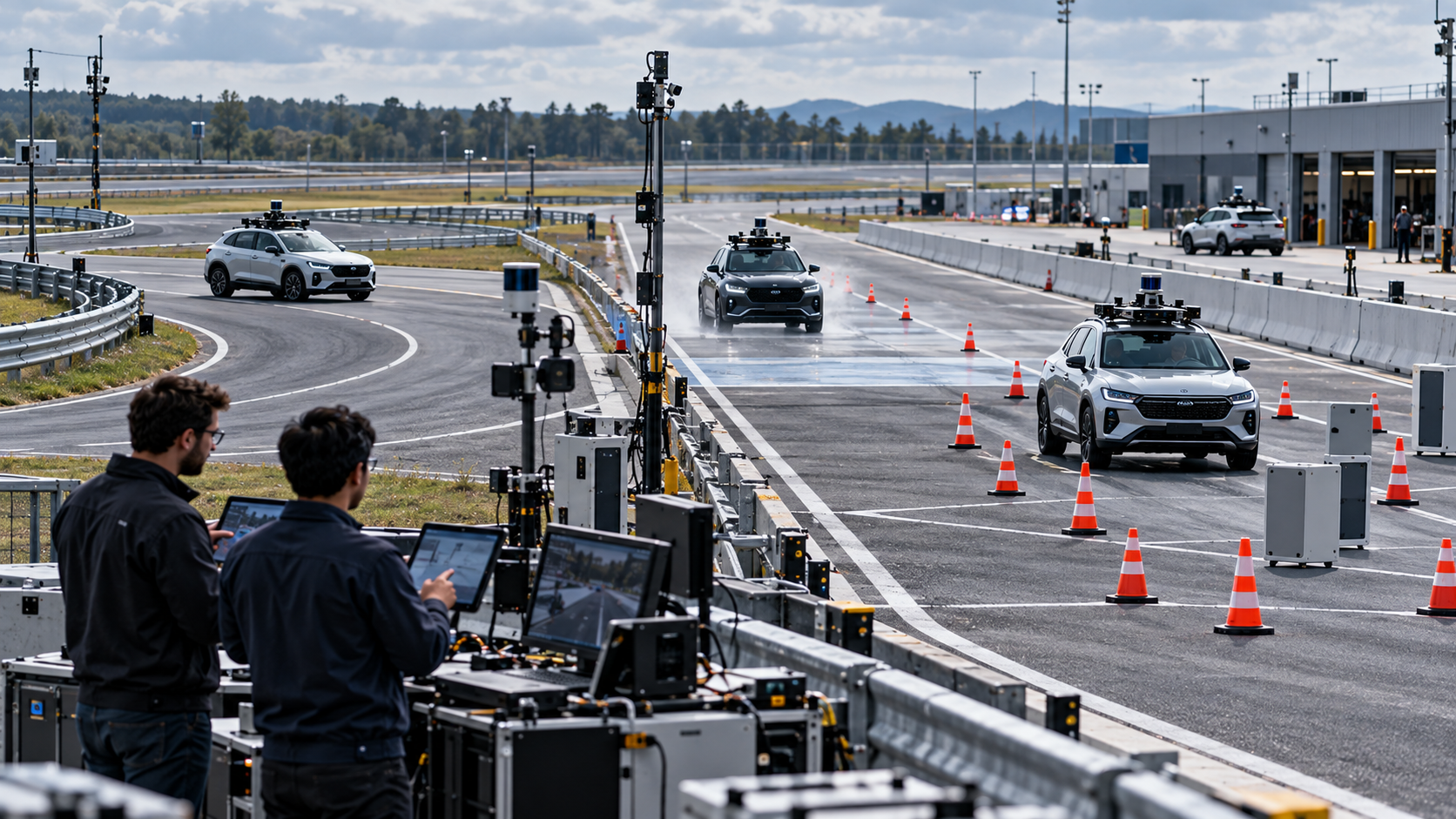
Working with RoshAi's guidance, the OEM implemented a multi-simulator testing framework tailored to specific validation needs. The architecture consisted of:
- NVIDIA Drive Sim for end-to-end physics-accurate multi-sensor validation and hardware-in-the-loop testing
- CARLA for rapid iteration on perception algorithms and open-scenario generation across diverse urban environments
- SUMMIT for high-fidelity dense urban traffic simulation and complex real-world map integration
- Flow for traffic control and reinforcement learning-based behavior validation in congested scenarios
- Deepdrive for lightweight, Gym-API-compatible algorithm training and continuous improvement cycles
Each simulator was assigned to specific testing phases and use cases, allowing parallel workstreams and eliminating single-tool bottlenecks.
Business Value
Measured Improvements Across the Validation Program
01Accelerated Development Cycle
Parallel simulation workstreams reduced validation timelines from 18 months to 12 months; developers no longer queued for simulator access
02Improved Algorithm Robustness
Multi-simulator validation exposed edge cases missed by single-platform testing; perception F1 scores improved 8-12% across corner-case scenarios
03Cost Efficiency
Open-source simulators (CARLA, SUMMIT, Flow) reduced licensing costs by 40% while improving flexibility; computational overhead distributed across multiple specialized tools
04Scenario Coverage
Generated 500+ unique urban traffic scenarios with realistic unregulated behaviors, far exceeding what the single proprietary simulator could produce
05Faster Iteration
Lightweight simulators (Deepdrive, PGDrive) enabled rapid algorithm prototyping; ideas moved from concept to validation in days rather than weeks
06Hardware-in-the-Loop Readiness
NVIDIA Drive Sim maintained fidelity for final pre-deployment validation while other tools handled earlier-stage development
07Regulatory Confidence
Demonstrated comprehensive multi-platform validation across diverse scenarios strengthened safety case documentation for autonomous feature certification.
Outcome
From Validation Bottlenecks to Production Deployment
The OEM successfully deployed Level 3 autonomous features on 500 production vehicles in pilot markets (San Francisco and Phoenix) within 12 months—4 months ahead of the previous single-simulator timeline. The multi-simulator approach identified and resolved 23 critical perception and planning edge cases that single-platform testing would have missed.
With this validation framework now operational, the company accelerated roadmap plans for Level 4 capability deployment in controlled logistics environments (warehouse-to-distribution hub routes) by mid-2027. The cost savings and improved time-to-market gave the OEM competitive advantage against peers still reliant on single-simulator approaches.