
Autonomous Vehicle Platform Resilience

About The Project
Strengthening Autonomous Vehicle Communication for Fleet-Scale Deployment
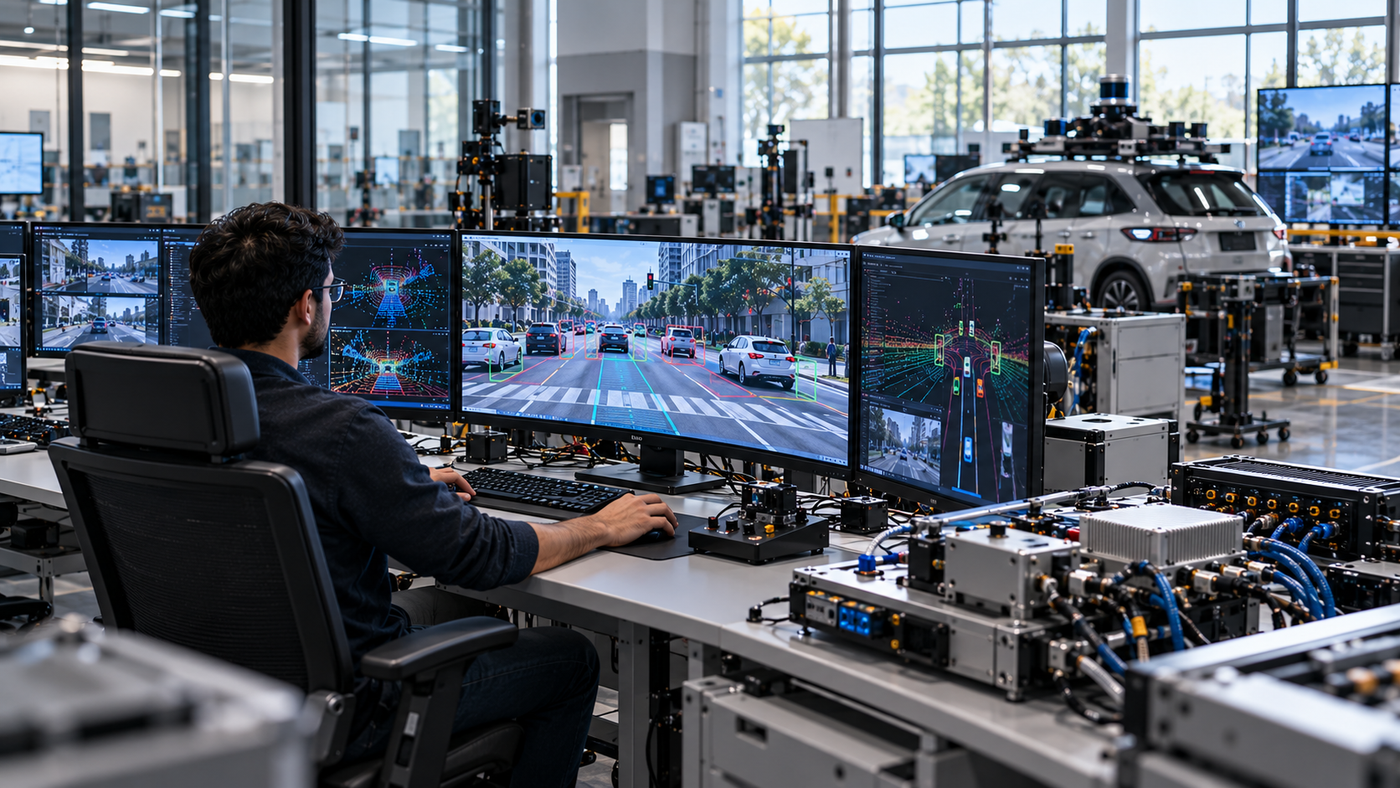
The project focused on strengthening a US Tier-1 EV automotive OEM’s ROS2-based autonomy platform as it moved toward production validation and fleet deployment, replacing its default peer-to-peer discovery model with a resilient FastDDS Discovery Server architecture.
The Challenge
Scaling Vehicle Communication Without Compromising Safety
The OEM's vehicle autonomy stack was built on ROS2 with the default Simple Discovery Server for inter-node communication. As the platform matured and moved toward production validation and fleet deployment, critical scaling and safety issues surfaced. The peer-to-peer discovery architecture created bottlenecks when managing dozens of compute nodes (cameras, LiDAR, planning units, control systems) across multiple vehicles.
With no built-in redundancy, a single discovery server failure could cascade into complete vehicle communication breakdown—unacceptable for safety-critical systems. Additionally, multicast flooding from peer-to-peer messaging consumed excessive bandwidth on vehicle networks, and latency spikes violated the millisecond-precision requirements mandated by ISO 26262 functional safety standards. Testing showed message loss during high-traffic scenarios, directly threatening the OEM's ability to certify and deploy autonomous fleets.
The Solution
Replacing a Single Dependency with a Resilient Discovery Architecture
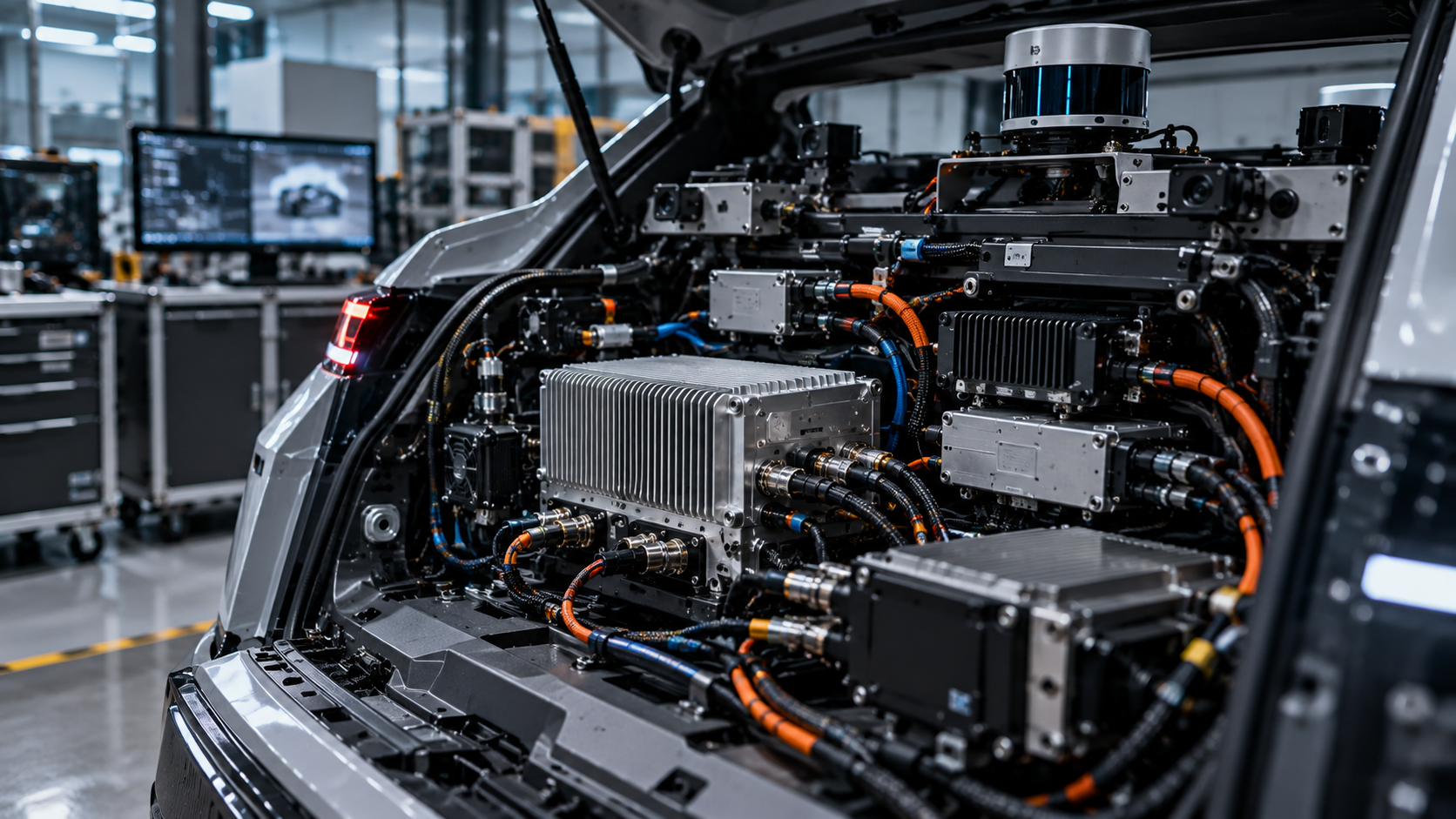
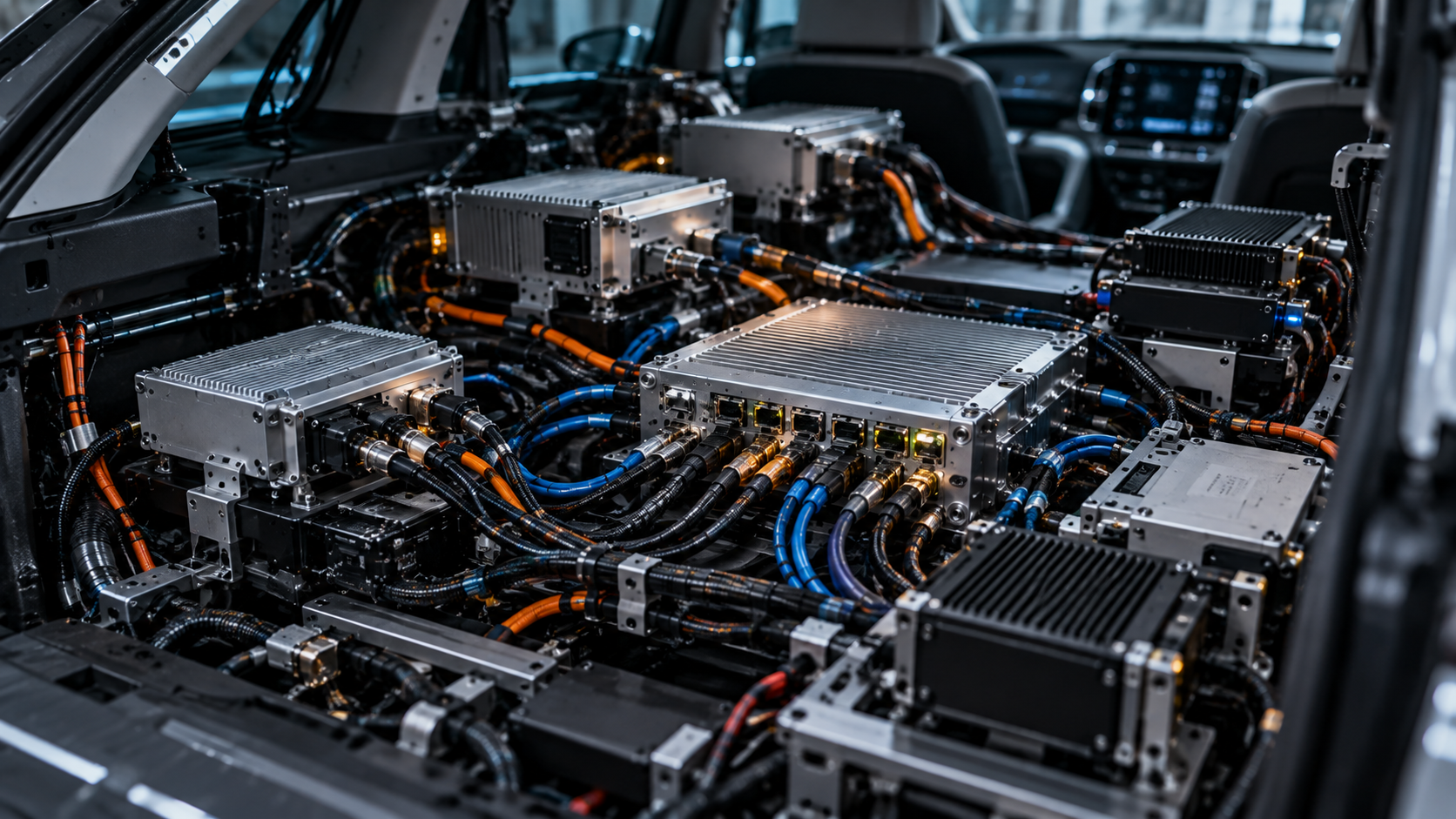
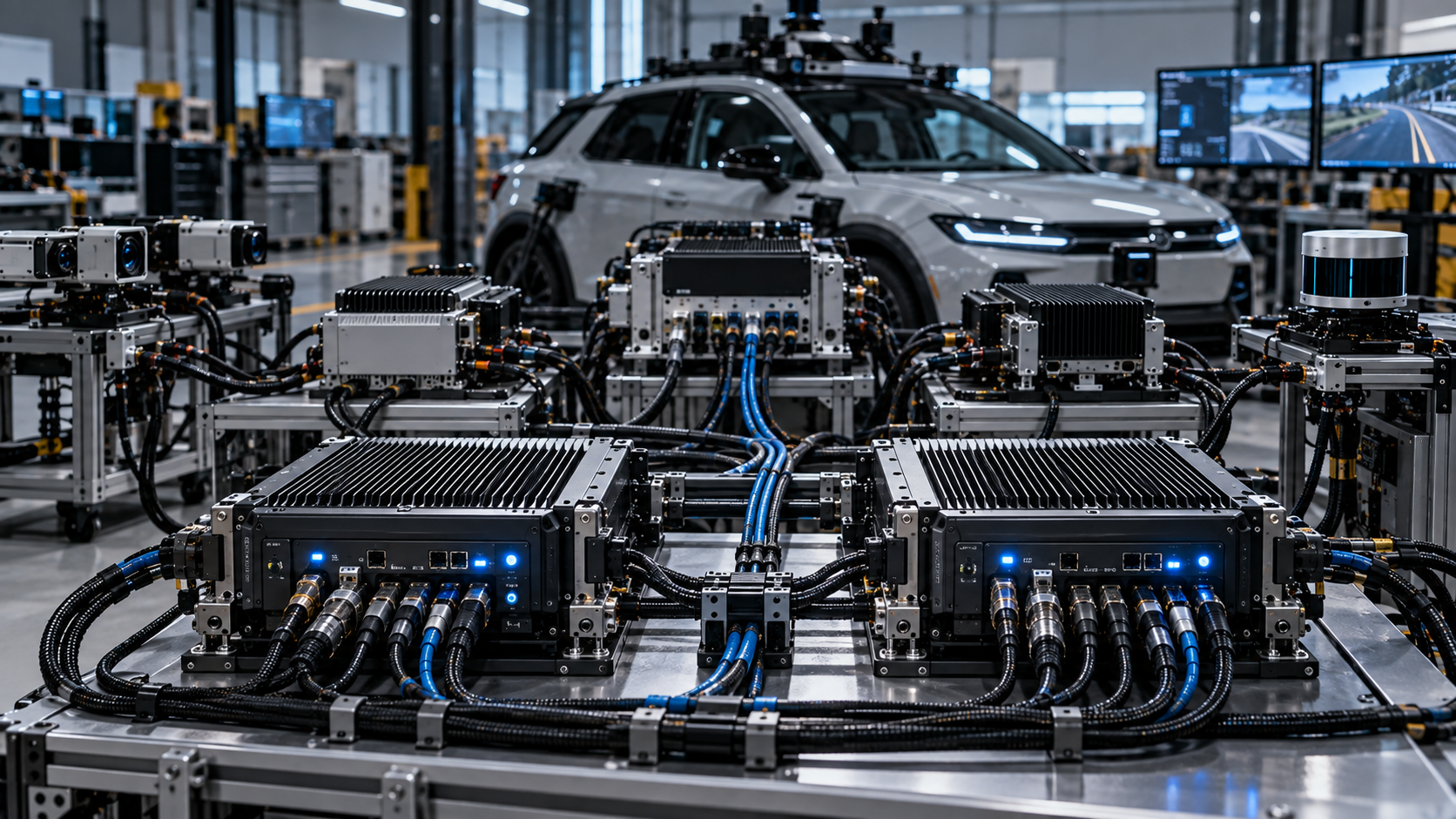
Working with RoshAi, the OEM implemented a FastDDS Discovery Server architecture, replacing the default peer-to-peer model with a resilient client-server topology. Vehicle nodes were reconfigured as discovery clients connecting to redundant, interconnected Discovery Servers running on dedicated compute units.
Multiple servers were deployed with failover capability, ensuring that no single point of failure could disrupt vehicle communication. The architecture allowed gradual rollout across test fleets before production implementation.
Business Value
Engineering Improvements That Reached Production Scale
01Safety Compliance
Achieved ISO 26262 functional safety requirements through multi-layer redundancy in message discovery, reducing certification risk
02Network Efficiency
60-70% reduction in multicast traffic across vehicle networks, improving bandwidth for sensor data and reducing latency variance
03Deployment Confidence
Redundant servers eliminated single points of failure, allowing safe operation in commercial fleet scenarios with minimal downtime
04Production Scalability
Client-server model simplified addition of new vehicle nodes (sensors, compute units) without redesigning discovery topology
05Regulatory Advantage
Demonstrated fault-tolerant architecture strengthened the OEM's position in FMVSS and autonomous vehicle certification discussions with regulators
06Time-to-Market
Reduced development and validation cycle by 4+ months through proven, production-ready architecture rather than custom discovery solutions
Outcome
Resilience Built Into the Vehicle Network
The OEM successfully deployed redundant discovery servers across a 50-vehicle pilot fleet for logistics operations, achieving zero communication-related incidents and clearing the path for scaled production deployment across North American regions.